EN
EN

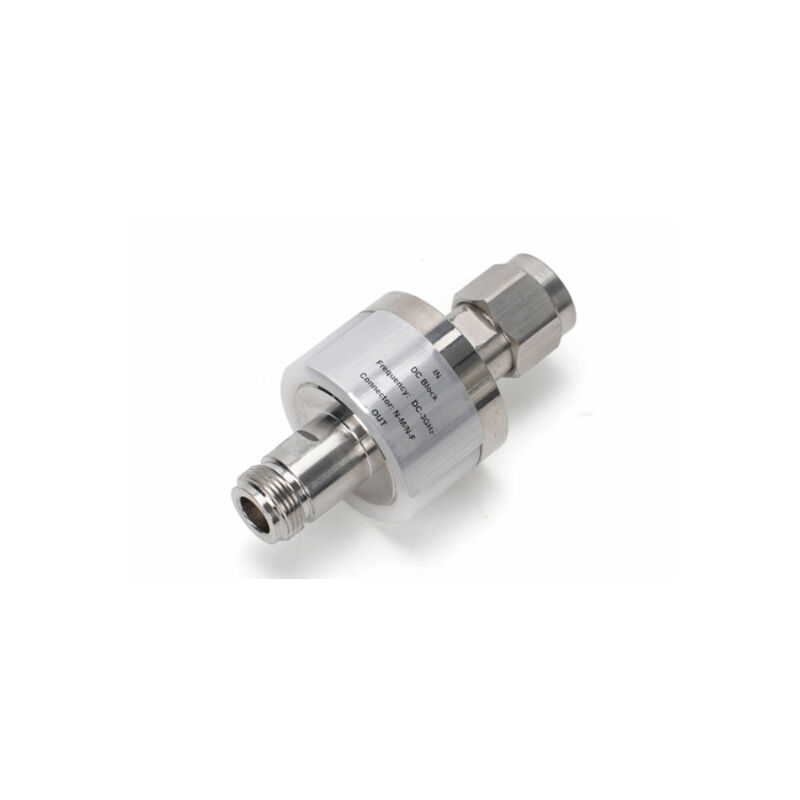
DC-BLOCK (NM-NF) DC-6000MHz
Product Model: DC-BLOCK DC-6000 (NM-NF)
The RF DC Block is a type of coaxial adapter whose primary function is to block direct current (DC) signals while enabling the unimpeded transmission of radio frequency (RF) signals. It utilizes capacitors to obstruct DC power, thereby protecting sensitive RF components from the impact of DC electricity and preventing DC power from interfering with RF signal sources and test instruments.
Product Description
♦ Frequency covers DC-6000MHz
♦ Suitable for indoor applications

- Specifications
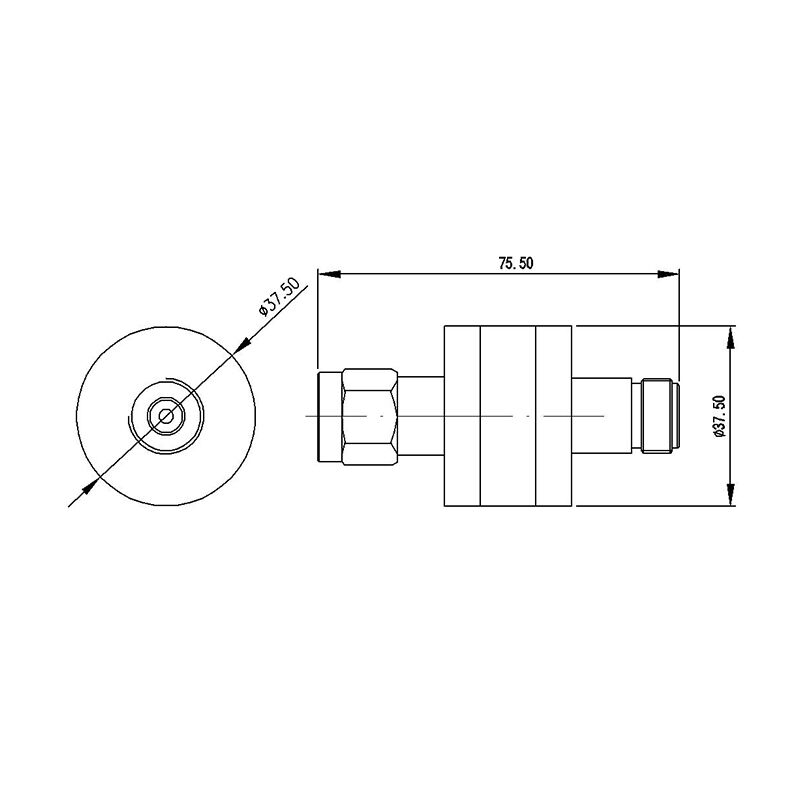
- Outline Drawing
- Applications
- Recommended Products
Specifications
| Frequency range | DC-6000MHz |
| VSWR | DC-3000MHz:≤1.25 3000-6000MHz:≤1.35 |
| DC Withstand Voltage | 3000 V/1min |
| Insulation resistance | ≥5000 MΩ |
| Transmission power | 200W |
| Impedance | 50 Ω |
| RF Connector Type | In:N-M / Out: N -F |
| Net Weight | ≤0. 19 kg |
| Dimensions (include connectors) | Φ37.5*75.5 mm /Φ1.48*2.97inch |
| Operating temperature | -35℃ to +75℃ |
| Relative humidity | ≤95% |
| Color | Natural |
| RoHS | Comply with RoHS |
Outline Drawing
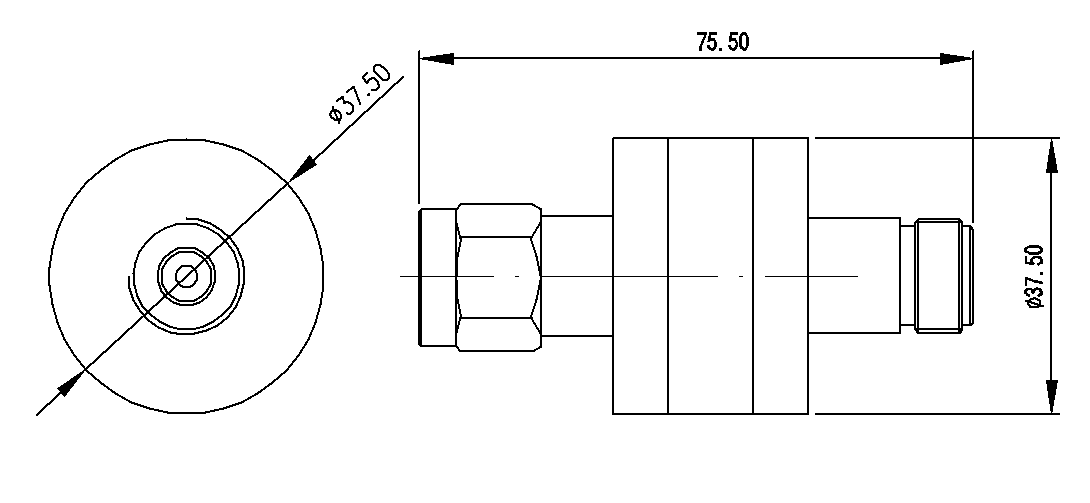
Applications
Product Description of RF DC Block
The RF DC Block is a type of coaxial adapter whose primary function is to block direct current (DC) signals while enabling the unimpeded transmission of radio frequency (RF) signals. It utilizes capacitors to obstruct DC power, thereby protecting sensitive RF components from the impact of DC electricity and preventing DC power from interfering with RF signal sources and test instruments.
Functions of the DC Block
1. Enhance Signal-to-Noise Ratio (SNR) and Dynamic Range
In low-frequency or broadband systems, the deployment of a DC Block can block DC signals, thus improving the SNR and dynamic range of the system.
2. Isolate and Block Low-Frequency Components
During the testing process, the DC Block can be used to isolate and block low-frequency components such as DC and audio signals.
3. Suppress Modulation Leakage of Signal Sources
In RF transmission lines, the DC Block helps suppress the modulation leakage of signal sources.
4. Eliminate Ground Loops
The DC Block can be used to isolate circuits from the ground, preventing current from flowing into the ground from circuit nodes or avoiding voltage generation between circuit nodes and the ground.
This RF DC Block features four core advantages, balancing high performance and practicality:
1. Wide Frequency Coverage and Strong Adaptability
It covers an operating frequency range of DC-6000MHz, fully compatible with mainstream application frequency bands including 3G/4G/5G communications, Wi-Fi 6E, and satellite microwave, satisfying multi-scenario signal transmission requirements from low frequency to ultra-high frequency.
2. Low-Loss Transmission and Signal Fidelity
Adopting an optimized impedance matching design, it achieves an insertion loss ≤ 0.5dB and a Voltage Standing Wave Ratio (VSWR) ≤ 1.3:1, minimizing signal attenuation to the greatest extent and ensuring the integrity and stability of AC signal transmission.
3. Robust and Durable with Excellent Environmental Adaptability
The housing is made of high-strength metal material, combined with a full-shielding structural design, delivering superior electromagnetic interference (EMI) resistance.
4. Flexible Installation for Multi-Scenario Adaptation
It supports customization of various RF connector types such as SMA, Type-N, and 2.4mm. With a compact and lightweight form factor, it can be directly connected in series in RF links without the need for additional power supply or debugging procedures, enabling efficient and convenient installation and operation.
In terms of application scenarios, this RF DC Block is widely used in RF and microwave circuits, mainly including the following fields:
1. Mobile Communication Field
It can be deployed at the RF front-end of 5G/4G base stations and between RRU modules and antenna feeder lines, blocking DC bias interference, ensuring signal transmission stability, and reducing failure rates.
2. Test and Measurement Field
It is an essential supporting device for instruments such as network analyzers and signal generators, isolating DC components in test links to ensure the accuracy and reliability of measurement data.
3. IoT and Industrial Communication Field
It can be connected to RF nodes of smart grids and wireless sensor networks, protecting terminal sensors and communication modules and improving the operational stability of industrial-grade communication systems.
The DC Block is extensively applied in fields including communications, the Internet of Things (IoT), 5G terminals, and high-speed rail signal engineering. It can protect DC-sensitive RF components from damage, completely block DC bias voltages and stray DC currents in circuits, and allow lossless transmission of AC signals such as RF and microwave signals, thereby preventing DC components from interfering with signal transmission or damaging backend sensitive components at the source. The DC Block can improve system SNR, suppress signal leakage, ensure the operational accuracy and service life of equipment, and serve as an indispensable key component for various high-frequency electronic devices.